
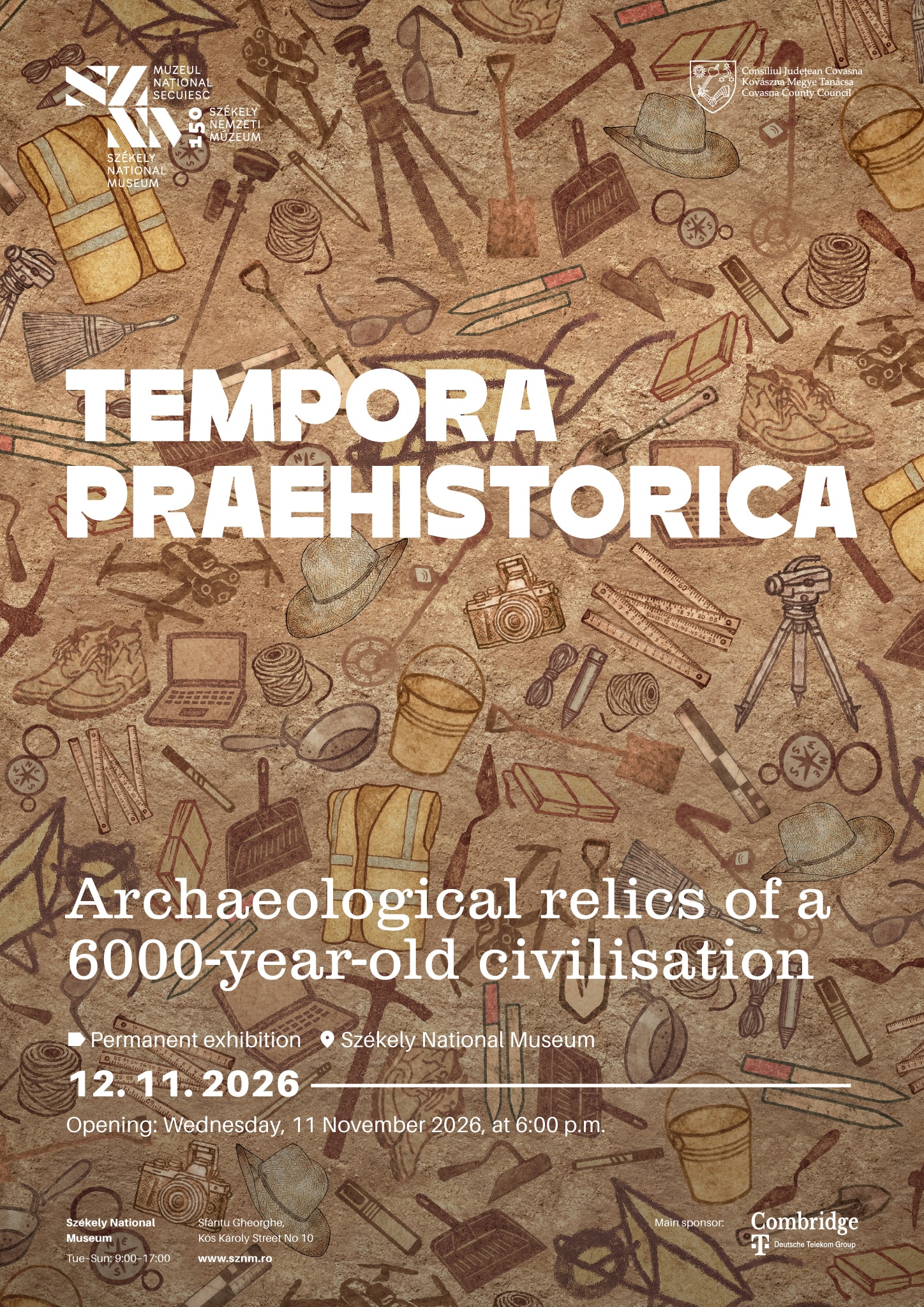
TEMPORA PRAEHISTORICA
Archaeological relics of a 6000-year-old civilisation


We invite our visitors to explore the world of archaeology and prehistoric cultures through the latest permanent exhibition of the Székely National Museum.
In 1907, Ferenc László, curator at the Székely National Museum, began systematic excavations on the archaeological site of Tyiszk Hill at Ariușd. This marked the beginning of an extraordinary journey through time that continues to this day. As archaeological remains were brought to light, a civilisation that had flourished more than 6,000 years ago gradually emerged and came alive. The settlement discovered at Ariușd became the eponym-site of the Transylvanian group within the Copper Age Ariușd–Cucuteni–Tripolye cultural complex. Both its excavator and the museum preserving the finds soon took their place within the mainstream of European prehistoric research. Over the past century, generations of archaeologists have studied the Ariușd group, enriching this journey into the past with further discoveries, new stages and fascinating details. Our permanent archaeological exhibition presents the principal results of this research.
The Ariușd–Cucuteni–Tripolye cultural complex emerged in the middle of the 5th millennium BC and flourished for more than a thousand years across a vast area of Eastern Europe, extending from Transylvania to the Dnieper Basin. Within this territory, the settlement area of the Ariușd group encompassed the intramontane basins of the Eastern Carpathians and their western peripheral regions. This civilisation was characterised by awell-organised society, a food-producing agrarian way of life, an extensive and hierarchical settlement network, carefully ordered settlement layouts that sometimes prefigured urban development. The material remains of this civilisation – exceptionally beautiful polychrome pottery and a diverse range of objects made of clay, bone, stone, copper and gold – testify not only to advanced technological knowledge and extensive economic connections, but also shed light on the distinctive features of the communities’ spiritual world and religious beliefs.
In addition to presenting the material remains of the prehistoric world, our exhibition also offers visitors an insight into the archaeological research methods used at the beginning of the last century, as well as modern methods employed today.